
AFCON 1996: How Mandela's South Africa Turned a 37-Year AFCON Ban Into a Nation-Building Triumph
Banned for 37 years, South Africa returned to AFCON and turned football into a tool of nation-building.

This article is part of a series called AFCON short stories.
“Sport has the power to change the world,” Nelson Mandela once said. Few moments illustrate that belief more clearly than South Africa’s return to the Africa Cup of Nations in 1996—after nearly four decades in exile.
Ironically, South Africa was a founding member of the Confederation of African Football (CAF), alongside Egypt, Ethiopia, and Sudan. It was even scheduled to take part in the inaugural AFCON in 1957 in Khartoum. But on the eve of the tournament, apartheid ideology collided with CAF’s Pan-African principles.
“It is either a pure white team or a black team,” declared Fred Fell, South Africa’s representative. Sudan’s football leader, Dr. Abdel Halim Mohammed, rejected the proposal outright. “We don’t accept that. We want black and white.” CAF’s position was clear: a national team had to reflect an integrated nation. Apartheid South Africa refused and was expelled.


The ban lasted 37 years. South Africa missed 18 AFCON tournaments, isolated from African football for refusing to abandon racial segregation in sport. CAF, often described as one of the first truly successful Pan-African institutions, drew a firm line between African unity and apartheid.
By the time South Africa returned in 1996, the country was shifting, Apartheid had been dismantled, Nelson Mandela had been free for six years, and the nation was riding the emotional high of the 1995 Rugby World Cup victory. When Kenya was unable to host AFCON, South Africa stepped in—turning the tournament into a symbolic homecoming.
AFCON 1996 unfolded amid political tension. Nigeria, the defending champions, withdrew under General Sani Abacha following diplomatic fallout with Mandela after the execution of activist Ken Saro-Wiwa. The absence only heightened the stakes.
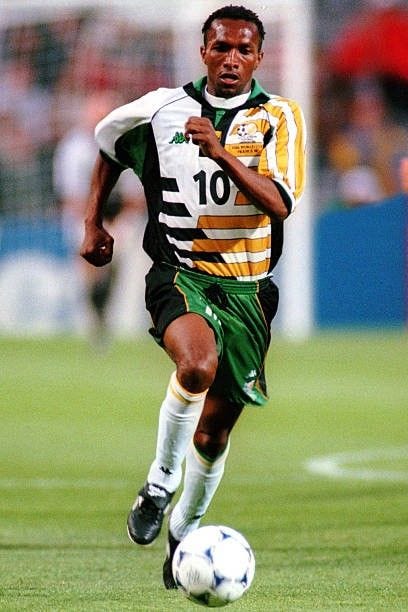
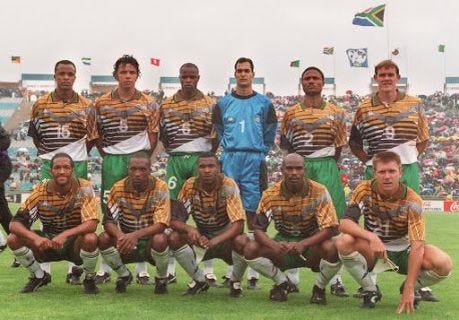
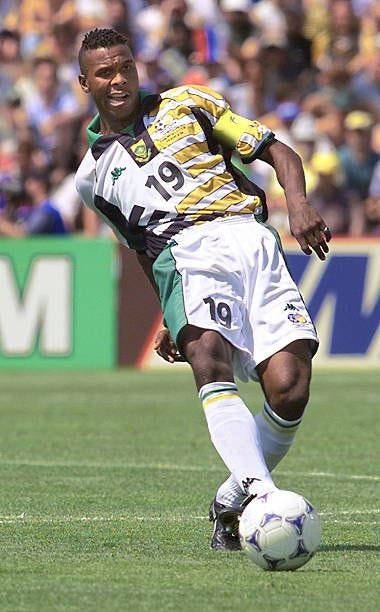
On the pitch, Bafana Bafana delivered. A 3–0 opening win over Cameroon saw Philemon Raul Masinga score South Africa’s first AFCON goal. Victories over Angola and Algeria followed, before a dominant 3–0 semifinal win against a Ghana side stacked with stars like Abedi Pele and Tony Yeboah. Lucas Radebe’s man-marking masterclass neutralized Yeboah, sending South Africa to the final.
Mandela remained a constant presence, visiting the team and reminding them half-jokingly of their national responsibility. “You know what happened with the rugby,” he told coach Clive Barker.
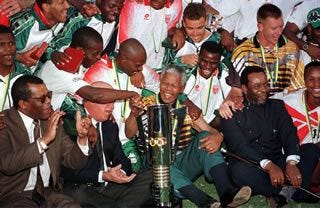
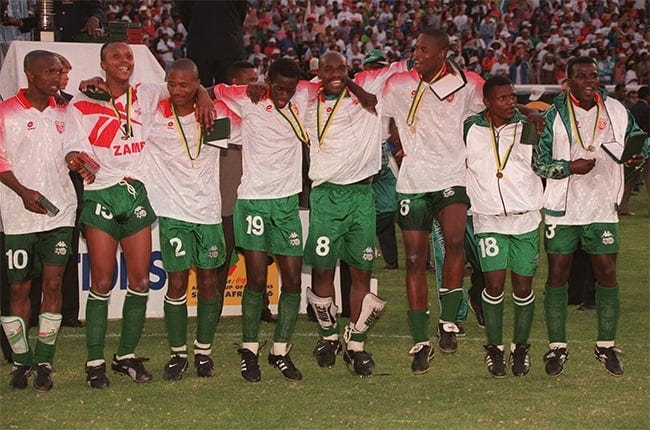
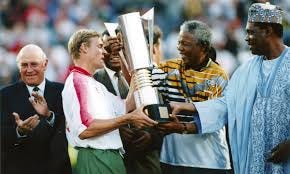
In the final against Tunisia, Mark Williams, having asked to start on the bench, came off the bench to score twice after the hour mark to seal a historic title. As Mandela and F.W. de Klerk joined the celebrations, football completed a powerful political arc.
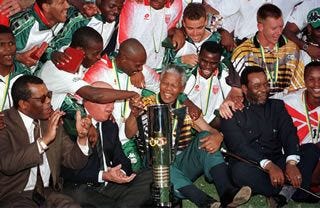
AFCON 1996 was more than a tournament. It was sports diplomacy in action. The coach and captain were white; the match-winner, Mark Williams, was coloured. At Soccer City in Soweto, the scenes echoed 1995—only broader, deeper, and more inclusive. Williams would earn the nickname “Nation Builder.”
Sources:
Caf archives
African Soccerscapes: How a Continent Changed the World’s Game by Peter Alegi Alexander Laverty, “Sports Diplomacy and Apartheid South Africa” (2010)